Buying creatine should be relatively simple.
Unfortunately, supplement packaging can make it look much more complicated than it needs to be.
You'll see creatine monohydrate, HCL, buffered creatine, micronized creatine, gummies, capsules and proprietary blends.
For most people, you can narrow the decision down to five things.
1. Choose creatine monohydrate
Creatine monohydrate is the sensible default for most users.
It is the form used in the majority of creatine research and usually offers excellent value.
You don't automatically get better results by paying more for a newer version.
If you need a refresher on why people take it in the first place, read what creatine does.
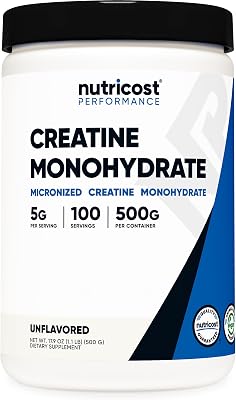
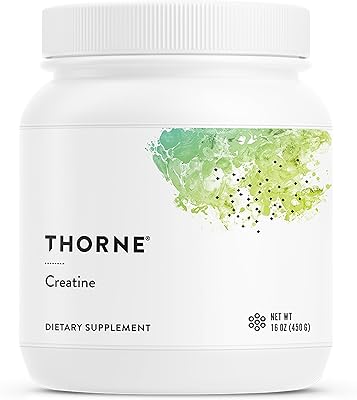
You can compare creatine monohydrate on Amazon.
2. Check the amount of creatine per serving
Don't just look at the front of the tub.
Read the nutrition or supplement information.
For most users, you want a product that makes it easy to consume around 3 to 5 g per day.
Some capsules and gummies contain relatively small amounts per piece, meaning you need several to get a useful serving.
Our creatine dosage guide explains how much you actually need.
3. Look for a simple ingredient list
For unflavoured creatine powder, boring is often good.
A label that says:
Creatine monohydrate
may be all you need.
Avoid assuming extra ingredients make the creatine more effective.
If you want a straightforward product, browse 100% creatine monohydrate powders.
4. Look at testing and manufacturing quality
Price shouldn't be your only consideration.
Check whether the manufacturer clearly explains its quality controls and whether the product has undergone independent testing.
Third-party certification may be particularly valuable for competitive athletes concerned about prohibited substances.
This is something we would weigh heavily when deciding which products deserve to appear in our recommendations.
5. Compare cost per serving
A large tub isn't automatically better value.
Instead, compare what you actually get.
For example:
- Tub A: $20 for 100 servings of 5 g, so $0.20 per serving
- Tub B: $18 for 60 servings of 5 g, so $0.30 per serving
Tub A costs more upfront but provides better value.
This is a much more useful comparison than package price alone.
Powder or capsules?
Powder usually offers the best combination of price and easy dosing.
Capsules can be useful if you:
- Travel frequently
- Don't like mixing powder
- Want pre-measured servings
The trade-off is that reaching 5 g may require several capsules.
Compare creatine capsules on Amazon
What about micronized creatine?
Micronized creatine is still creatine monohydrate.
The particles are simply smaller, which can help the powder disperse more easily.
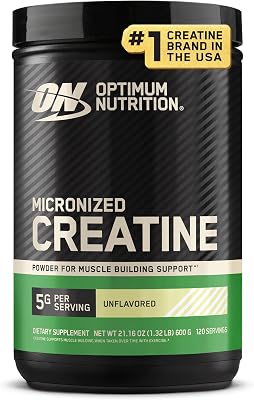
If normal creatine feels gritty, micronized creatine monohydrate may be worth trying.
Don't assume micronized automatically means more effective.
Do you need a loading product?
No.
If you decide to use a loading phase, ordinary creatine monohydrate works perfectly well.
Read our creatine loading guide before deciding whether loading is worthwhile.
Does timing affect which product you should buy?
Not really.
There's no need to buy separate morning, evening, pre-workout or post-workout creatine.
A straightforward monohydrate can be taken whenever it suits your routine.
See when to take creatine for more detail.
Our simple checklist
Before buying creatine, look for:
- Creatine monohydrate
- Around 3 to 5 g per serving
- Clear ingredient information
- Credible manufacturing and testing information
- A reasonable cost per serving
Everything else is secondary.
Bottom line
The best creatine supplement doesn't need to be complicated.
For most people, a simple creatine monohydrate powder from a reputable manufacturer provides everything necessary.
Compare creatine supplements on Amazon
Or start from the beginning with our complete guide to creatine.